Type
Guide
Date
Sep 2025
Written By
RestingLabs Team
Weighted blankets are supposed to be calming, but if you run hot, they can feel like you are paying for a very expensive personal sauna.
Here is the question that really matters, can you get the deep pressure of a weighted blanket without cooking underneath it. And if you can, what should you actually look for, knit or quilt, glass beads or plastic pellets, bamboo or cotton, and does any of it show up in real thermal tests, not just marketing.
Guide • ~13 min read
Quick summary
If you are a hot sleeper and want a cooling weighted blanket:
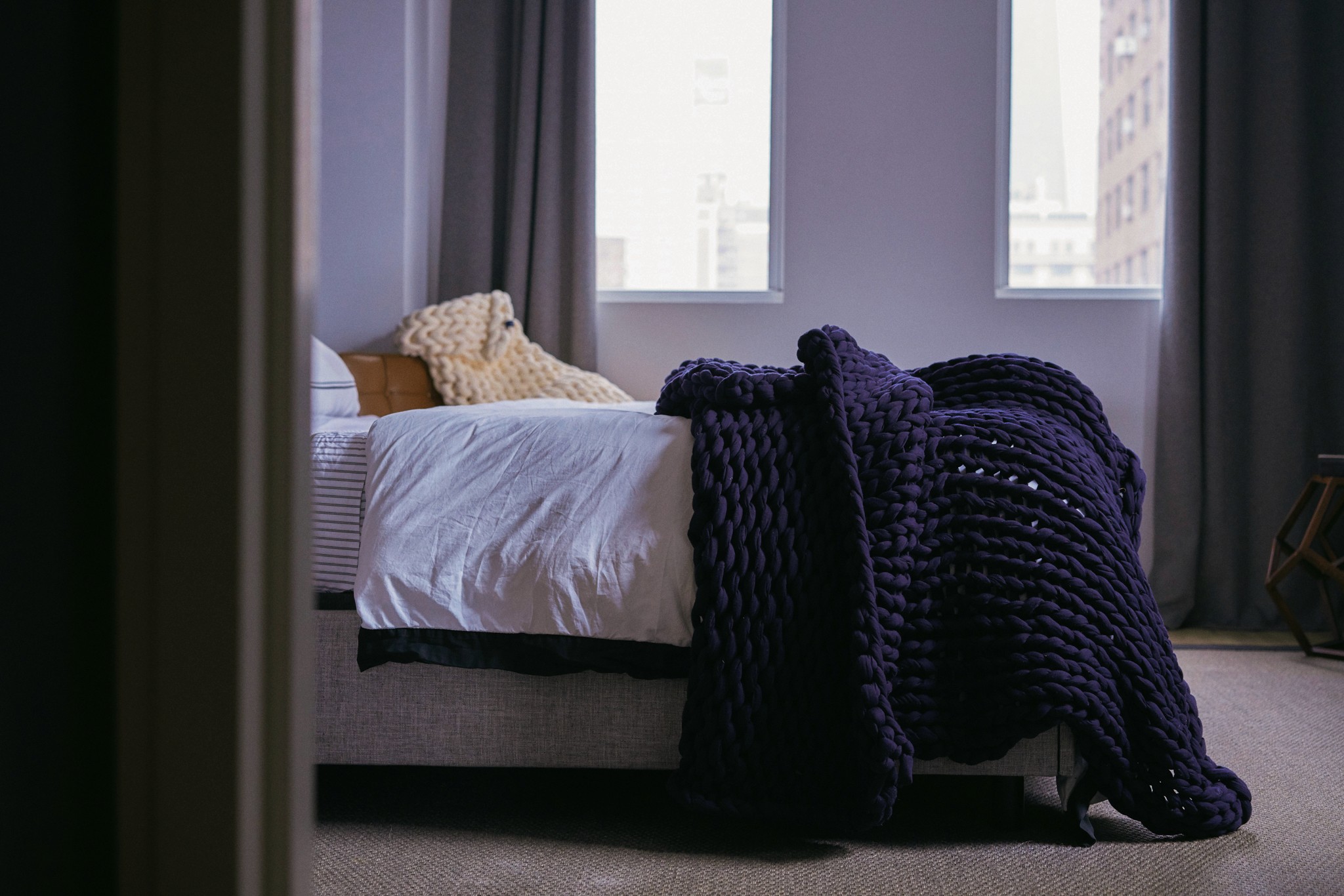
Start with an open knit weighted blanket if you can tolerate the texture, the gaps let air move and most testing outlets find they run cooler than traditional quilted builds.
If you want a more classic quilted feel, look for glass beads plus a thin cotton percale or lyocell shell, not plush polyester.
Treat the 10 percent body weight rule as a rough starting point, not a law, your ability to move and breathe easily matters more than the exact number.
Never use weighted blankets or weighted sleep sacks for infants, and be careful in adults with obstructive sleep apnea, COPD, severe asthma, or major circulation issues.
And because we are RestingLabs, we will also show you the thermal test protocol we use so that future reviews have numbers, not just vibes.
The cooling basics, in plain English
When you are under a blanket, three things decide how hot you feel over the night:
How easily air can move through it
How thick and dense the blanket is
What the shell fabric does with heat and moisture
Weighted blankets add pressure on top of all that, so the details matter more.
1. Airflow, open knit versus quilted
Imagine lying under two blankets:
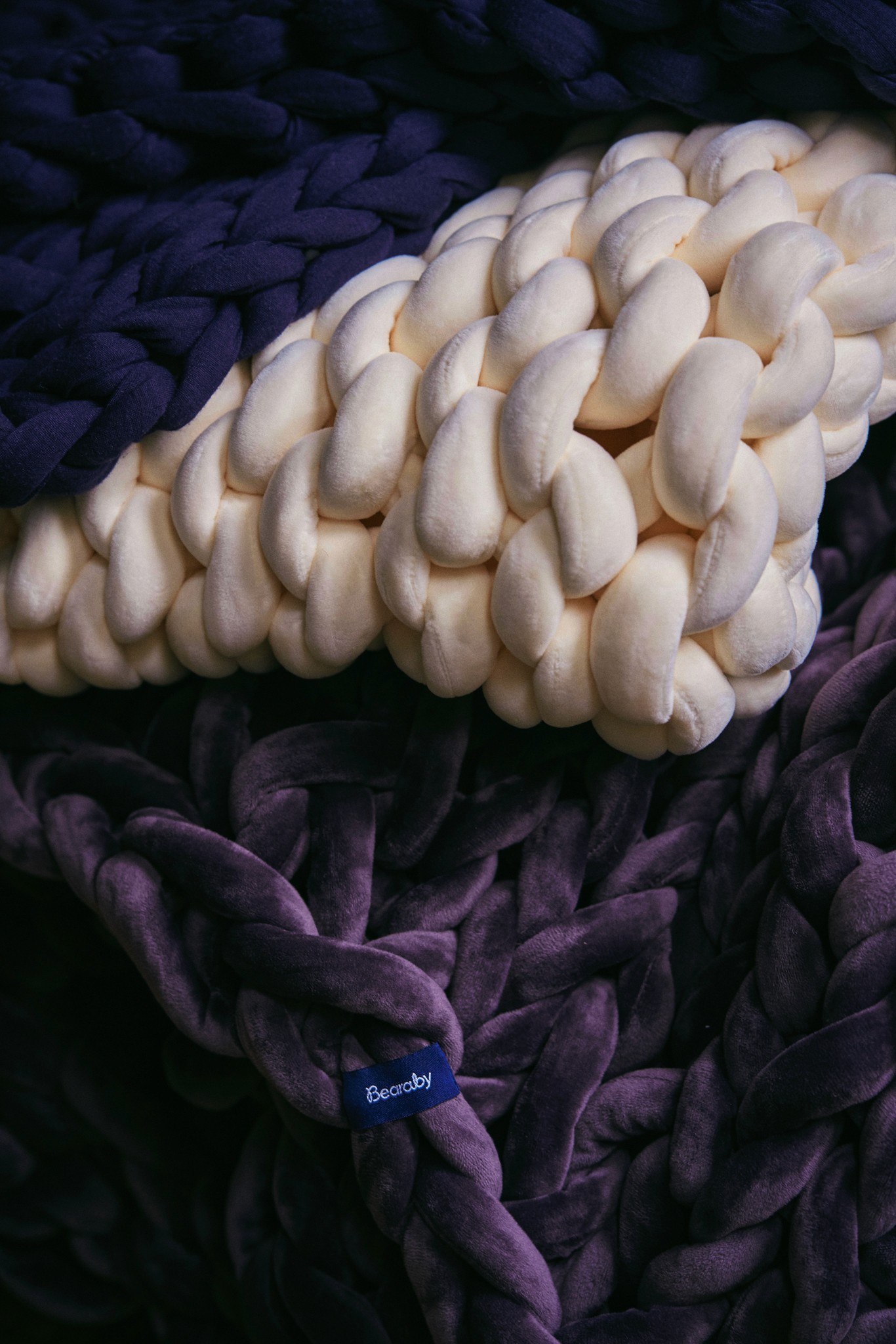
One is like a chunky sweater with visible gaps between loops
The other is a tightly quilted duvet with several layers stitched together
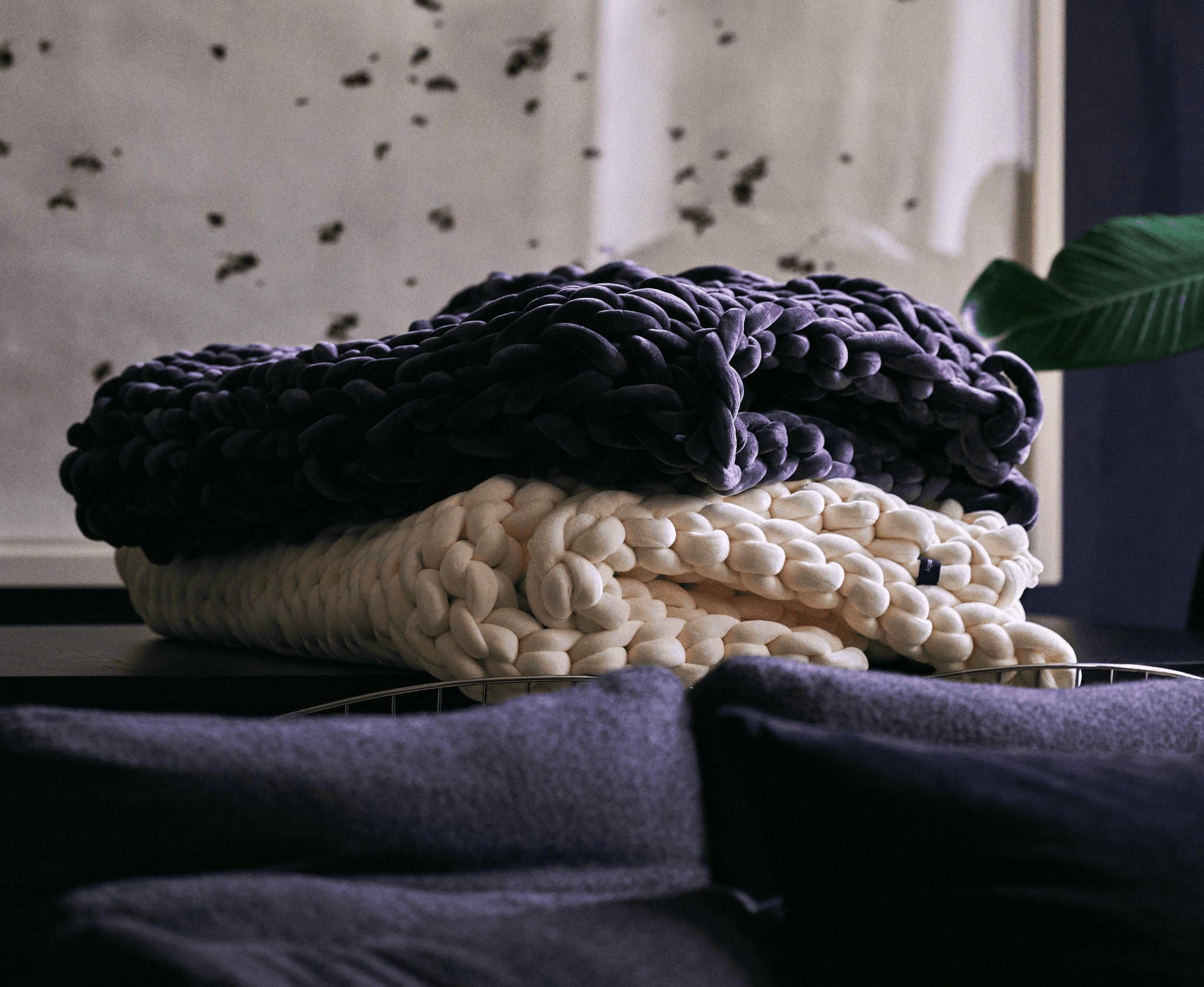
Even if they weigh the same, the first will almost always feel cooler, because air can escape instead of getting trapped next to your skin. That is why open knit weighted blankets have become the default recommendation for hot sleepers, editorial test labs repeatedly note that they are the least warm style they have tried. Sleep Foundation+1
Quilted weighted blankets, especially ones with multiple inner layers, naturally restrict airflow. Great for people who run cold, less ideal if you already kick off the covers at 3 a.m.
2. Bulk and fill, glass beads versus plastic pellets
For quilted blankets, the filler is doing a lot of work:
Glass beads are small and heavy
You can pack the same weight into less volume
That lets the blanket be thinner, which usually means less insulation and faster heat release
Plastic pellets are bulkier
To reach the same weight, you need more material
That often means a thicker, puffier blanket, which traps more air and therefore more heat
Independent testing and product reviewers often report that glass bead quilts feel cooler and less bulky than similarly weighted plastic pellet designs. New York Magazine+1
Glass is also often quieter, fewer rustling sounds when you or your partner move.
3. Shell fabric, what actually matters
Fabric marketing loves big labels, bamboo, eucalyptus, cooling tech. But underneath the buzzwords, thermal comfort mostly comes down to:
Weave and thickness
Percale cotton and other crisp, plain weaves tend to feel cooler than thick sateens and fuzzy knits
Fiber behavior
Cotton, lyocell, and TENCEL usually absorb and move moisture better than straight polyester, which can feel clammy when you sweat
Most “bamboo” blankets are viscose derived from bamboo, which behaves a lot like rayon and lyocell anyway
Textile work on cooling blankets lines up with this, air permeability and moisture handling beat the label on the hang tag. Sleep Foundation
So if you are choosing a cooling weighted blanket for adults:
Prioritise thin, smooth weaves like cotton percale or lyocell
Be wary of thick minky, fleece, or velour shells if you run hot
Treat “bamboo” as a nice to have, not a magic bullet, make sure the construction is actually breathable
How we test cooling, the thermal protocol
Marketing words like “cooling” are cheap. Numbers are harder. To keep ourselves honest, we use a simple, repeatable test setup, inspired by textile lab standards but adapted to a bedroom context.
Here is the protocol:
Condition the room
Target 21 plus or minus 1 degrees Celsius, around 50 percent relative humidity
Close windows, let the room sit for about an hour so temperature stabilises
Baseline setup
Place a low power heat pad on the mattress
Cover it with a thin cotton sheet to simulate a person
Put a small calibrated temperature logger where your skin would be, between sheet and blanket
Heat rise, 15 minutes
Turn the heat pad on at a fixed setting
Put the test blanket on top
Record how many degrees above room temperature the sensor climbs over 15 minutes
Lower rise, cooler blanket in use
Cool down
Turn off the heat pad, leave blanket in place
Measure how long it takes for the sensor to return to within 0.5 degrees Celsius of room temperature
Faster cool down, less heat trapping
Moisture test
Repeat the sequence after misting a couple of millilitres of water on the sheet
Note how quickly temperature and “damp feel” return to baseline
This simulates light sweating
Airflow proxy
Record construction, open knit versus quilted, stitch density, and overall thickness
Compare weight to thickness as a crude “density” measure, open knit should show lower density per kilogram
From that, we can build a Cooling Score that blends:
Construction and airflow
Heat rise and cool down
Moisture handling
That way, when we say “this open knit model runs cooler than that glass bead quilt”, it is not just a hunch.
Which build for which sleeper
Once you understand the mechanics, choosing gets much simpler. It is less “best weighted blanket overall” and more “best weighted blanket for how your body behaves at night”.
You run hot or get night sweats
Your top priority is airflow.
Start with an open knit weighted blanket with no internal beads at all, the weight comes from thick yarn, and air can move freely through the gaps
Pair it with cool sheets, like cotton percale or lyocell, and a room temperature around 18 to 20 degrees Celsius
If knit texture bothers you, or you want something more traditional:
Pick a quilted blanket with glass beads
Choose the thinnest shell you are comfortable with, cotton percale or lyocell again
Avoid plush synthetics, especially all over minky shells
You want maximum “hug” and pressure
You care more about that even, enveloping pressure than about ultimate coolness.
Choose a quilted weighted blanket that spreads beads in small squares so weight stays put
Look for glass beads to reduce bulk at a given weight
You can accept a bit more warmth in exchange for that cocooned feel, just do not go straight to heavy minky if you ever overheat
If you live in a warm climate, consider owning two blankets:
Knit or lighter quilt for most nights
Heavier, thicker quilt for cold seasons only
You already sleep on the cool side
You are the rare person who steals all the covers and still has icy feet.
Most constructions will work for you
Focus on noise level, glass beads are usually quieter than plastic pellets
Look at care instructions, can you wash or at least spot clean easily
Pick a weight that feels calming, not restrictive, even if it is slightly above or below the usual 10 percent guideline
Fit and safety, non negotiable
Weighted blankets are not just cozy toys, they are physical devices that press on your body for hours. A few rules are not optional.
The 10 percent rule, treated as a heuristic
You will see advice like “choose 10 percent of your body weight”. That is a decent starting point, but:
Research does not show a magic threshold
Some people prefer 8 percent, some 12 percent
Your real safety check is:
Can you turn over easily
Can you remove the blanket yourself without effort
Do you ever feel short of breath, pinned, or panicky
If you are unsure, start a little lighter and move up only if you genuinely want more pressure.
Infants and very young children
This one is simple, do not use weighted blankets, weighted sleep sacks, or weighted swaddles on infants.
Major pediatric groups and consumer safety agencies explicitly advise against any weighted sleep products near sleeping babies, citing risks of lower oxygen levels and increased SIDS risk. HealthyChildren.org+2U.S. Consumer Product Safety Commission+2
If a child cannot reliably remove the blanket themselves, they are too young or too limited in mobility for an unsupervised weighted blanket. When in doubt, wait.
Breathing and circulation issues
If you have:
Untreated obstructive sleep apnea
COPD or severe asthma
Serious heart failure or circulation problems
Significant claustrophobia
Talk to your clinician before adding a weighted blanket, especially a heavy one. Some people with treated apnea still enjoy a blanket. Others find any extra chest pressure uncomfortable. You want someone who knows your lungs and heart to weigh in.
Textile safety
Since you are in close contact with the fabric for hours:
Prefer blankets with OEKO TEX Standard 100 or similar certifications for harmful substances
Wash covers before first use, then follow care labels so fillings and shells do not degrade prematurely
What the sleep evidence actually says
Weighted blankets feel nice, but do they actually improve sleep in measured ways, beyond comfort.
The strongest signal so far comes from a 2020 randomized controlled trial in Sweden. Adults with insomnia and psychiatric conditions like depression, bipolar disorder, anxiety, or ADHD were assigned to either a weighted chain blanket or a light control blanket for four weeks. The weighted blanket group showed:
Larger reductions in insomnia severity scores
Better daytime functioning and activity levels
High odds of response and remission compared with the control group PMC
Follow up over 12 months suggested these gains could be maintained when people continued using the blanket.
However, later systematic reviews and newer trials in broader, healthier populations tell a softer story. They generally find:
Weighted blankets may slightly improve subjective sleep quality and relaxation for some users
Objective changes in sleep stages and total sleep time are usually small or inconsistent
Response is very individual, some people feel a big difference, others feel nothing at all
So the honest summary is:
Weighted blankets are a low risk, potentially helpful tool, especially if anxiety and sensory comfort are big factors for you
They are not a cure for insomnia, and they do not replace CBT I, treatment of sleep apnea, or other medical care
Cooling features are about comfort and adherence, making it more likely you actually want to use the blanket regularly, not about supercharging the underlying sleep effect.
Pros
Clear cooling framework
You get a simple rule set, open knit for airflow, glass beads and thin breathable shells if you choose quilted, plus real world thermal testing to back it up.Evidence aware, not hype driven
The guide acknowledges promising RCT data in specific groups but keeps expectations realistic for everyone else, weighted blankets are framed as an option, not a miracle.Safety forward
Strong, explicit cautions for infants and people with respiratory or circulatory issues, with advice grounded in current pediatric and safety guidance.Adaptable to budget and preference
You can start with a single open knit blanket, or build a small “wardrobe” of knit and quilted options for different seasons, the principles stay the same.
Cons
Data gaps and trade offs
There are still few peer reviewed head to head thermal tests of real weighted blankets, so some of the “glass cooler than plastic” story comes from editorial testing rather than lab grade textile research.Cooler rarely means cool like no blanket
Even a good cooling weighted blanket will not beat a thin summer quilt for pure temperature. If your number one goal is staying as cold as possible, pressure blankets will always be a compromise.Weight guidelines are not precision dosing
The classic 10 percent rule is more tradition than tight evidence. Comfort and safety will always matter more than exact percentages, which can frustrate people who want a formula.Not for everyone
Some people simply do not like the feeling of weight, or find any blanket too warm in summer climates, and no construction trick fully fixes that.
Notes
Pair your weighted blanket with cool bedding and a sensible bedroom temperature for best results, sheets and room temp are just as important as the blanket itself.
If you are unsure about warmth, err on the side of slightly lighter weight and smaller size, you can always add a layer on top, but it is harder to subtract heat once you are trapped.
For many hot sleepers, a useful pattern is open knit year round, quilted only on the coldest nights, or for short naps where warmth feels pleasant rather than overwhelming.
Used thoughtfully, a cooling weighted blanket stops being a gamble and becomes a tuned part of your sleep environment, pressure where you want it, heat where you can handle it, and fewer nights where you wake up sweaty and baffled at 3 in the morning.
Sources
Weighted blankets & sleep outcomes: Ekholm et al., RCT of weighted chain blankets in adults with psychiatric disorders (JCSM, 2020); recent overviews/meta suggest mixed effects in general populations. PMC
Cooling construction & materials: Sleep Foundation testing notes open-knit runs cooler; glass beads retain less heat than plastic in multiple editorial guides. Textile studies link air permeability & moisture transport to thermal comfort. PMC
Safety: AAP/CPSC explicitly advise no weighted products for infants; major 2022 recall for a children’s weighted blanket. Adults with OSA/respiratory disease should approach cautiously. Sleep Foundation
Textile safety certification: OEKO-TEX® STANDARD 100—tests textiles for harmful substances. OEKO-TEX